Correspondence & Meeting with Thomas Jefferson
In 1791 Thomas Jefferson and James Madison traveled in the Hudson Valley to examine its flora and fauna and meet with local political leaders. They breakfasted in Hudson with Seth Jenkins, who owned a large distillery, and tried to persuade him that wine from France was superior to molasses from the British West Indies in making spirits. Jefferson subsequently wrote Jenkins about the matter. Jefferson’s object was to encourage trade with France rather than dependence on the British West Indies.
Jenkins answered his letter a couple of weeks later complaining that the low cost of wines might serve a good purpose if “that heavy Duty was out of the way”, which Jefferson was imposing! He also mentioned that he had carefully read Jefferson’s report on American cod and whale fisheries and found it quite thorough, then added that some whale fisheries in Nantucket will be moving to France, perhaps another jab at the American government for its policies regarding duties on American goods.
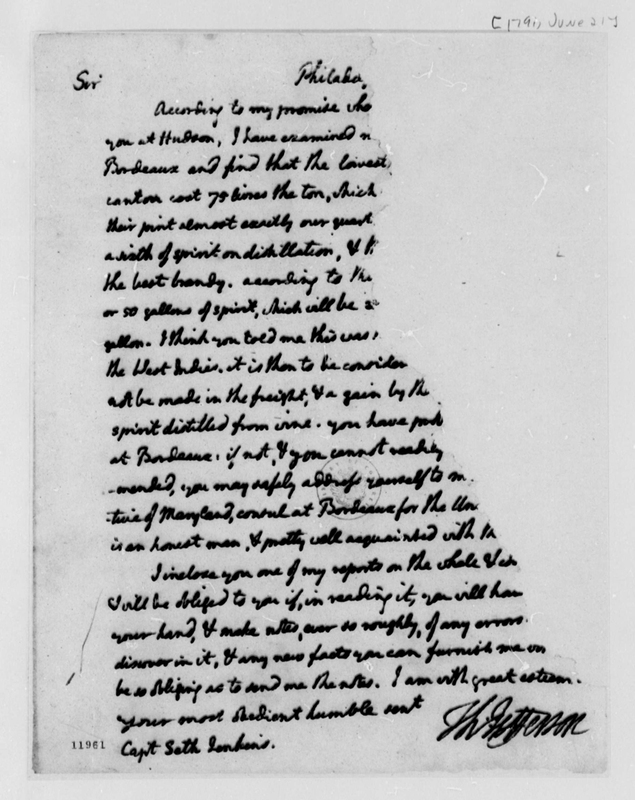
Letter from Thomas Jefferson to Seth Jenkins, mutilated, June 21, 1791
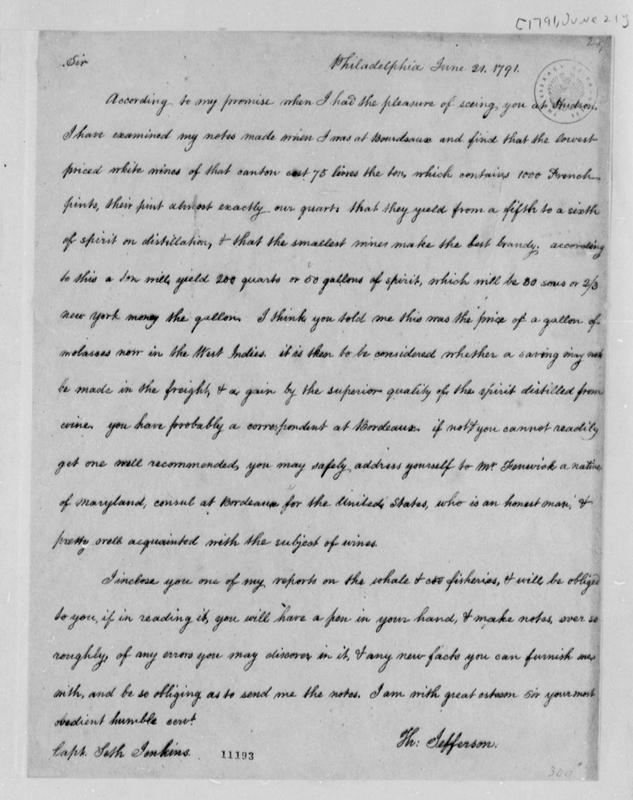
Copy of letter from Thomas Jefferson to Seth Jenkins, June 21, 1791
You can find both the original copy and letter on the Library of Congress website.
Years later President Jefferson would sign the Embargo Act of 1807 prohibiting American ships from trading in all foreign ports. This act was to force Britain and France to respect American neutrality during the Napoleonic Wars, but had a devastating effect on American trade. It was repealed two years later but by then it had destroyed Hudson’s whaling industry.
Hudson, 5 July 1791. Acknowledging Jefferson’s letter of 21 June about cost of “low Wines” in southern France, Jenkins states that if “that heavy Duty was out of the way,” they might serve a good purpose. But at present they “cannot answer for Distilling in this Country.”