
A Bitter Experience
For the Mohicans of Onaquaga, the Rebels posed a grave threat.
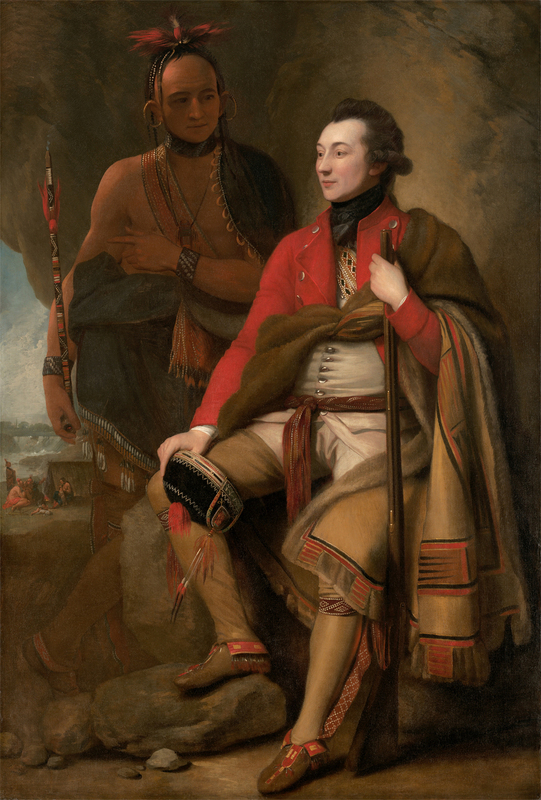
Colonel Guy Johnson of the British Indian Department & Mohawk leader Karonghyontye (Captain David Hill), 1776
Oil Painting by Benjamin West
National Gallery of Art, 1940.1.10
Over the course of the mid-18th century, many of Columbia County’s Mohican People sought refuge in the upper Susquehanna Valley between Windsor and Oneonta, NY, where they could maintain a more traditional lifestyle. There, they built thriving farming settlements adjacent to villages of Oneidas, Tuscaroras, and other Haudenosaunee People. Like most other American Indian Nations, the Mohicans on the Susquehanna saw the Revolution as a grave threat to their sovereignty as indigenous people. They knew that many of the Founding Fathers were land speculators, and feared that the loss of British control would lead to an invasion of Indian Country. Their fears were well founded. Between 1777 and 1779, their village at Onaquaga — and virtually every other town and farm in the country of the Six Nations — was burned to the ground. Early in the war, the Mohicans of Onaquaga sought neutrality. When the Rebel General Philip Schuyler rebuilt Fort Stanwix in the heart of Indian Country in 1777, they were forced to take sides. At that time, charismatic Mohawk leader (and captain in the British Army) Joseph Brant arrived in their village. The Mohicans of Onaquaga became fervent Loyalists. From the Battle of Oriskany (1777) to the destruction of the Schoharie Valley (1780), the Loyal Mohicans of Onaquaga fought as British allies to defend Indian Country from the Rebels.
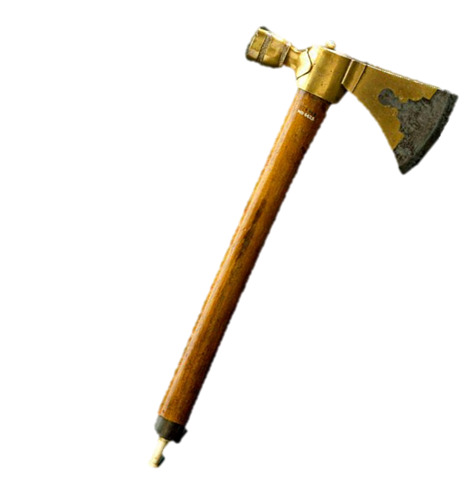
Pipe Tomahawk belonging to Mohawk Captain Joseph Brant
Royal Ontario Museum, 924.46.4.1
When the Americans emerged victorious in 1783, a report spread among British Indian allies that the Continental Army was planning to invade and destroy them. Although unfounded, most of the British Indian Department’s loyal allies — including the Mohicans of Onaquaga — moved to the Grand River in Ontario. A tributary of Lake Erie, the Grand River officially became their new home with the Haldimand Proclamation of 1784. The Mohicans of the Grand River Reserve would live in their own village on the river for close to fifty years before assimilating to their Mohawk, Oneida and Delaware neighbors through intermarriage in the 19th century. Their descendants remain on the Grand River Reserve — Canada’s largest reservation — to this day.
“Father: We have been long in your Alliance — [our ancestors] saw you first come to [the Hudson River], and entered into alliance with you, which we have ever since observed; we hope that you will always do the same, and we now assure you that our Bodies are purged of every bad thing, and that all nations Shall witness our good behaviour — We have cleared the Sky, that the Sun may shine bright upon us both.”
Susquehanna Mohican Leader Keewahal to Col. Guy Johnson (1768)
The Papers of Sir William Johnson, Vol. XII, 497-500.
