
The Talman Family: from Enslaver to Abolitionist
Dr. John Talman is listed in the 1790 census (below) as living with three white females (presumably his wife, Heroine Jenkins, and their first two children) and two enslaved individuals. We have not found any record of the enslaved persons or their situation.
The Talmans would go on to have eight more children including their son John Thurston Talman (1795-1850) who became an abolitionist.
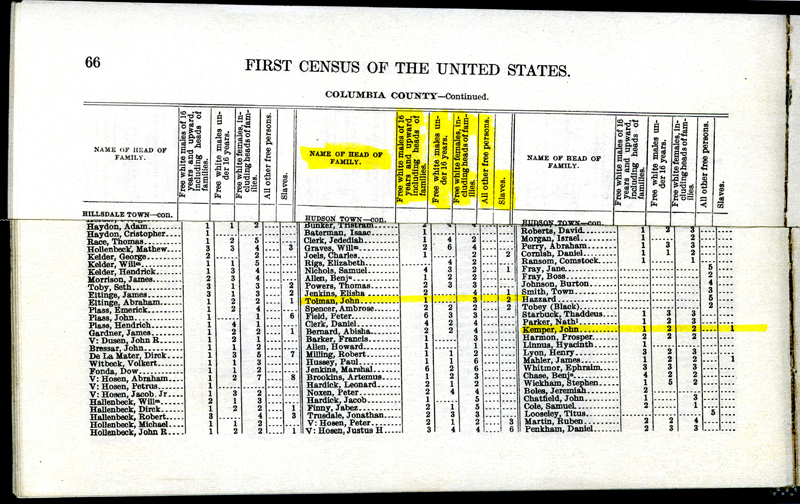
1790 United States Census for New York
John Talman (spelled Tolman on the census) is listed as owning two enslaved persons and John Kemper as owning one.
Heads of Families, At the First Census of the United States Take in the Year 1790, New York. Baltimore: Genealogical Publishing Co., Inc., 1976.
Rochester was a hotbed of abolitionist activity. Mary Eleanor and her sisters, Elizabeth Potts and Ann Carol, were all active in the abolition movement as were their husbands. Ann and her husband Gerritt Smith’s home in nearby Peterboro was a station on the Underground Railroad and she had an enclosed carriage in which she would travel with veiled fugitives to Canada.
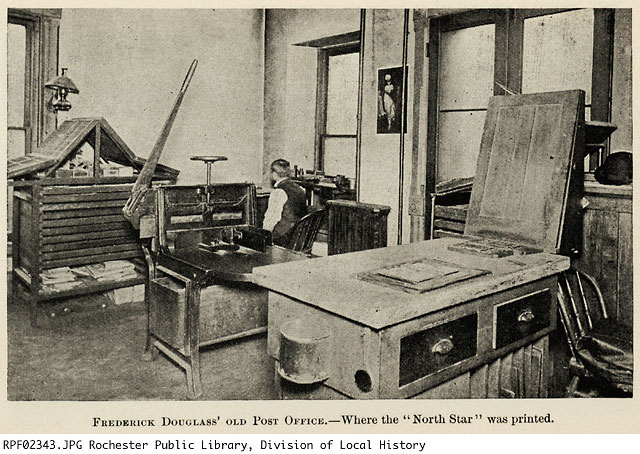
Frederick Douglass moved to Rochester with his family in the late 1840s. Mr. Douglass’s North Star printing office was on the second floor of the Talman Building.