
John McKinstry
b. 1745 Londonderry, NH d. June 9, 1822 in Livingston, NY
Revolutionary Service: Officer in Revolutionary War, fought at Battle of Bunker Hill,
Lt. Col., 8th Regiment Albany County Militia, The Levies, Col. Willett’s Regiment
____________________________________________________
Saved from Certain Death by Masonic Signs, Saloon Keeper, Forbearer of a Hudson Pharmacy Business
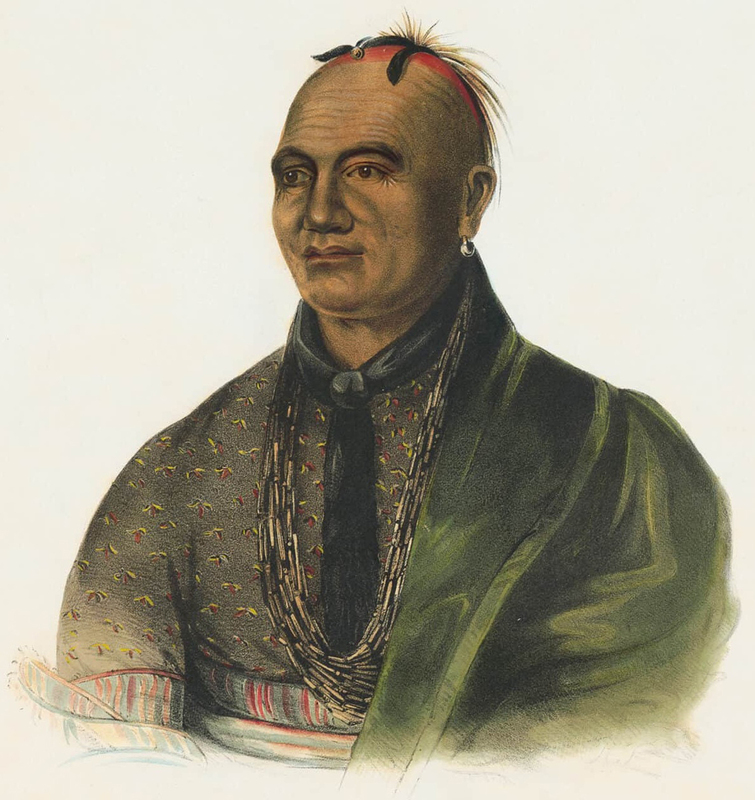
Joseph Brant (Thayendanegea) from History of
the Indian Tribes of North America, Thomas
Loraine McKenney and James Hall
John McKinstry and his three brothers all served in the 8th and 9th Regiments of the Albany County Militias. John is probably best known because of his spectacular way of avoiding death following the surrender of the American Forces in the Battle of the Cedars on the St. Lawrence River in 1776. The Mohawk tribe of the Haudenosaunee, who were fighting alongside the British captured McKinstry. They were preparing to burn him alive, but McKinstry knew that one of his captors, Thayendanegea or Joseph Brant, was a fellow Mason. McKinstry gave the Masonic Grand Hailing sign of distress to Brant and was freed. The two became lifelong friends. Brant would visit McKinstry who hosted an annual dinner at the Hudson Masonic Lodge in his honor.
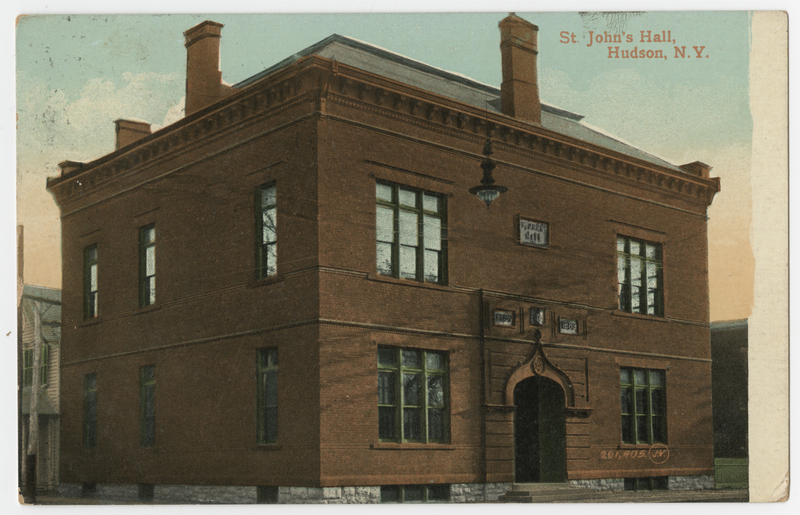
St. John's Hall
Hudson Postcard Collection, Hudson Area Library, Hudson, NY
After the war John McKinstry opened the first public house in Hudson. It was at that location on Warren (then Main) Street that a Freemason meeting was held and a petition was prepared requesting a charter be granted by the Grand Lodge of the State of New York. The Hudson Masonic Lodge was established in 1795 and the Proprietors granted the Freemasons a plot of land on the southeast corner of Union and Third streets. After a fire it was rebuilt as St. John’s Hall and still stands today with the Masonic symbol of the square and compasses.
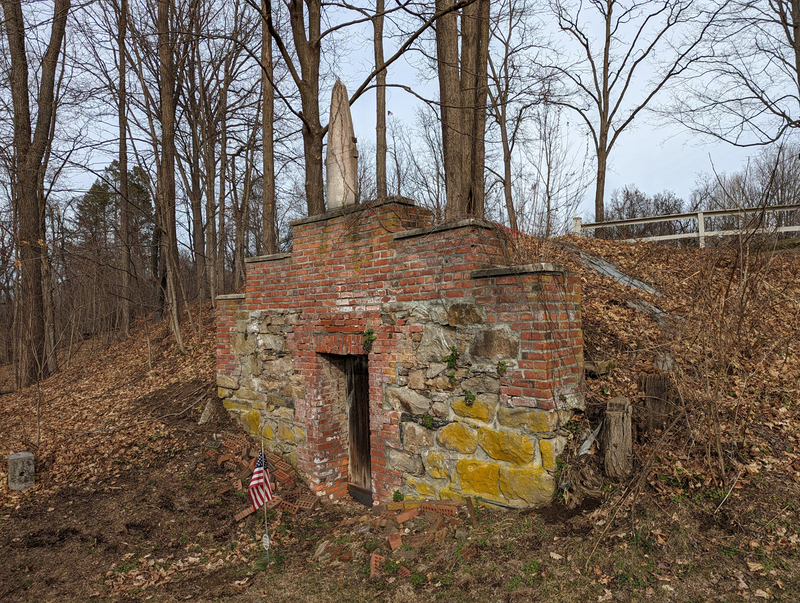
Colonel John McKinstry’s grave
Livingston, NY
__________________________________________
Additional Resources:
Due to the lack of record keeping during the Revolutionary War, veterans had to prove their service to request pensions. See two claims below for Captain John McKinstry:
From the Auditors Office New York June 27th 1787. Abstract from the Revolutionary War Accounts and Claims (Series A0200), from New York in the Revolution as Colony and State, 3d ed., 2 vols. (Albany: 1904).