Student Life and Experiences
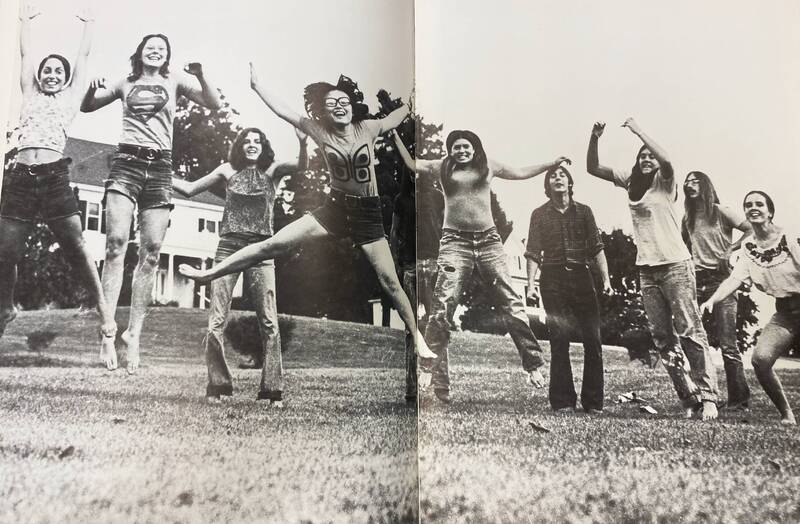
“[Alumnae’] photographs and memory books…contain no assignments or themes or report cards. Preserved instead are such things as dress regulations, invitations to dine or take tea with Miss Bennett, housemothers notes praising or chiding the condition of a room, and photographs of frolics, picnics, friends - in short, the atmosphere of an era and its special good times.” - Bennett Bulletin, September 1965
With anywhere from 200 to 350 students enrolled each year and with a diverse student body that included international students to day students from Millbrook, it’s impossible to summarize a “typical” student experience at Bennett. Yet looking through student handbooks, yearbooks, and publications gives us a glimpse into some of the experiences shared by the students during the formative years of their young adult lives from dorm life to the classroom to extracurricular activities and off-campus exploration.
Admissions:
The annual Tuition, Room and Board, and Health Service Fees for students enrolled at Bennett in 1906 was $1,000, equivalent to $37,000 in 2026. Many Bennett students came from wealthy families but not all. A 1974 school catalog indicated nearly a quarter of students were receiving financial aid and scholarships to support their attendance.

"My Room," Bennett College, Millbrook, Dutchess, New York, 1912-1914. Bennett College Collection.
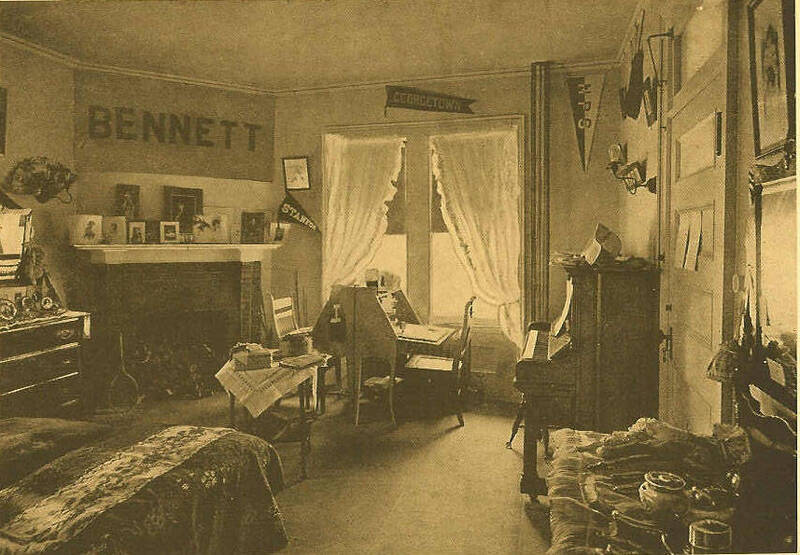
Student dorm room, Bennett College, Halcyon Hall, Millbrook, Dutchess, New York, c. 1908. Bennett College Collection.
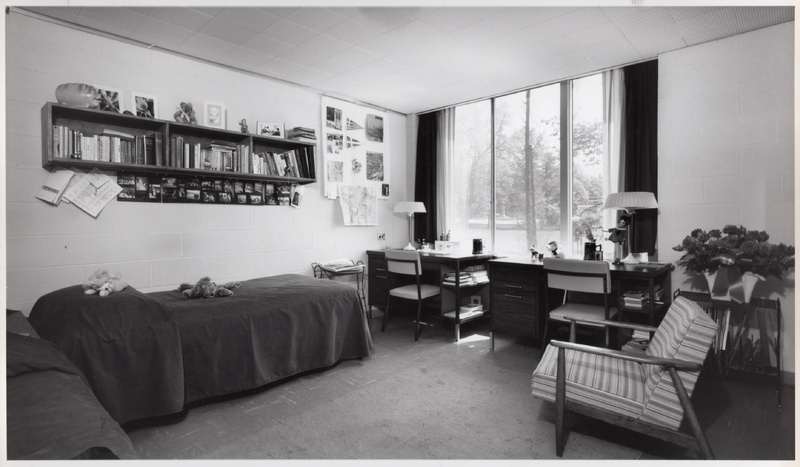
Student dorm room, Bennett College, Millbrook, Dutchess, New York, 1970. Bennett College Collections.
Dorm life:
“At the head of the social life of the school are the house mothers, who give all their time and thoughts to mothering.”
From the start, Bennett employed dedicated house mothers, later residence counselors, to assist students with personal and social matters outside of academics. Residential staff and a dedicated “permissions office” were also responsible for addressing interpersonal and health issues, leaves from campus, and excused absences.
As a general rule, students shared their dorm room with a roommate, with the exception of a few day students who commuted to the campus from Millbrook and other local towns. Meals were offered on a regular schedule in a dedicated dining hall.
In the early days of housemothers, the girls’ rooms were inspected daily and graded by the housemothers for tidiness, reminding them with little notes that only bedroom slippers might be left in view on the floor, that clothing must not be hung from the chandeliers, and of many other regulations. The housemothers also saw that each girl was in her room at “lights out” (10 pm Sunday through Thursday, 11 pm Friday and Saturday) that a student did not thereafter turn on her light to read, even if she had a sleepless night; and that she did not get up before 6:30 am.
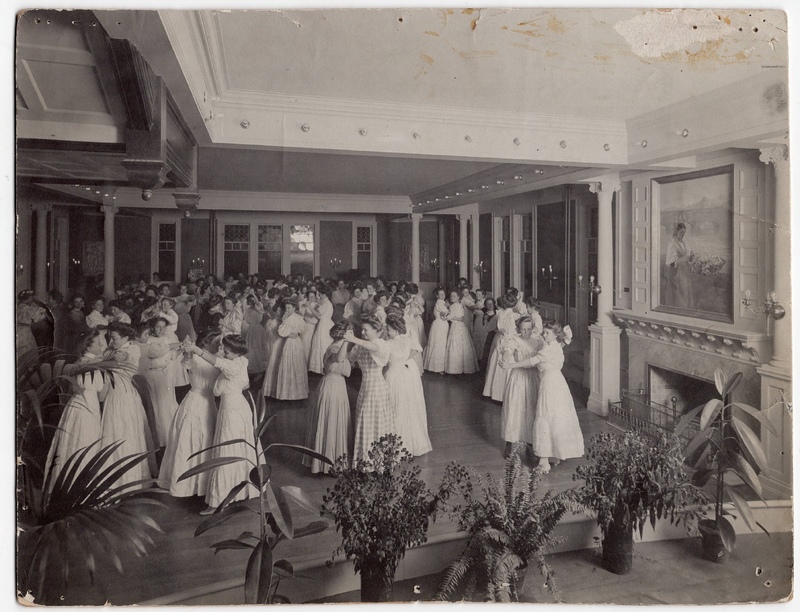
Students dancing, Bennett College, Halcyon Hall Music Room, Millbrook, Dutchess, New York. c. 1908. Bennett College Collection.
Student Code of Conduct & Dress Code:
In the early years of the school, Bennett students, like girls everywhere at the time, found their lives heavily regulated.
Besides the housemothers, there were chaperones. Students were not allowed to go to the Village of Millbrook without one. Shops that were off limits to Bennett students included “the candy shop, the beauty shop, the butcher, the baker, the barber, the tailor, clothes exhibits at any shop, even the bank, the post office, the railroad station and the five and ten!”
“Feast” rules forbade eating anything between meals except “permission” foods, which were fresh and dried fruits, but not berries. There was also a list of “permission” magazines, almost all of a serious nature.
Parents were asked to supply lists of those persons with whom their daughters might correspond. The students were on their honor not to talk on the phone to boys and men except their brothers or fathers. Only with approval from home might they have boy guests or callers (guests stayed beyond a meal hour but callers did not). And they were reminded that if they wished to play golf with a young man guest, they must take along a chaperone.
“The regulations dealing with such a large number of girls are sensible and consistent. The question of dress is treated extremely sensibly, Peter Thomson suits, of different weights to correspond with different seasons, are the only clothing allowed on five working days of school from morning until time to dress for dinner.” - Millbrook Mirror and Round Table, October 4, 1907
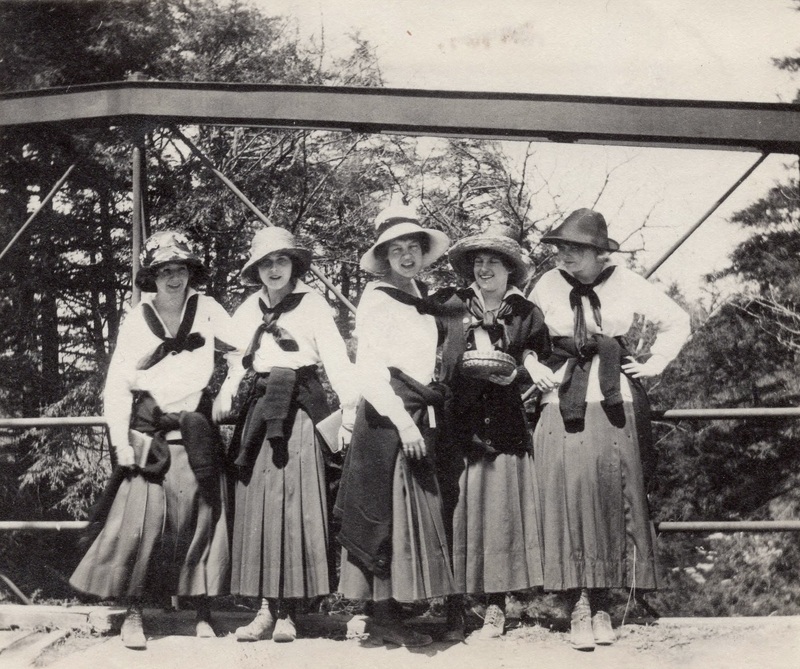
Photo of students in Peter Thomson middy suit uniforms, Bennett College, Millbrook, Dutchess, New York, 1911. Bennett College Collection.
In a parody of the School’s strict dress code, students wrote “For work days the girls wear simple burlap sailor suits. For Evening, a white cheesecloth mother-hubbard. A white drawstring around the neck fastened down the front with three simple bone buttons. No jewelry is allowed except substantial steel safety pins. For Church, a cape and hood.”
When enormous hats were in vogue, there was consternation over the edict that no hat exceeding 14 inches in diameter might be brought to the school. This was because Millbrook residents couldn’t see past the Bennett girls and their hats when they were at church.
The Peter Thomson middy suit of early years gave way to a sack-like jumper and blouse, still a uniform, worn with black cotton stockings and black “ground gripper” shoes. For evening and Sundays, students were permitted slippers with heels no higher than 1 ½ inches and simple dresses of fine cotton or light wool. They could not wear silk, satin, or lace gowns, silk slips, expensive jewelry, and white furs.
The emphasis of these early rules was greatly on decorum and health. “Graver infringements were apt to result in MIss Bennett’s sudden appearance on the ‘cuckoo balcony’. This was a small balcony high on the wall of the old dining room which accommodated musicians playing through dinner hour during Halcyon’s hotel days. From it, at meal times in Miss Bennett’s era, came such momentous announcements as news of the Armistice at the end of World War I and such lesser pronouncements as: “Girls who cannot find stumps of trees or fences to sit on must stand up. Chaperones are to report girls who do not follow these instructions and if a crop of colds results from this picnic, the picnic privilege will be taken away for the rest of the month.”
The era of the uniform and black shoes and stockings ended in 1932. If further proof were needed that times had changed, it came in 1933 with the introduction of a smoking room in Harkaway. The housemothers, and under some circumstances, the chaperones lingered somewhat longer, but life was largely regulated by responsible student government. Starting in 1939, an annual student association handbook was published by Bennett Student Council which outlined expectations for students’ code of conduct in communal living each year.
Student safety and health remained a top priority of administration as reflected in the school’s ongoing employment of security staff. A New York Times article from 1963 points to these concerns over the school’s new neighbor, psychedelic icon Timothy Leary. “Now the 60-acre campus of Bennett College…is in walking distance of the former Harvard lecturers' transcendental manor. "As a precautionary measure," the president, Donald A. Eldridge, has declared the [Leary] estate "out of bounds" for Bennett's 330 students, who have been made to understand that expulsion might follow any violation of this rule.”
Bennett’s student council continued to advocate for students’ autonomy to make their own choices in regards to visitors, curfews, etc.
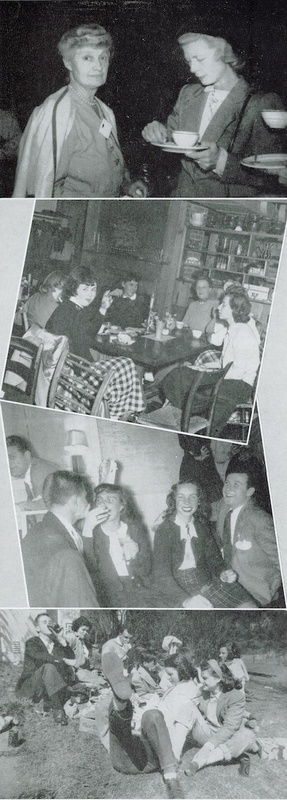
Yearbook, Bennett College, Millbrook, New York, 1949. Bennett College Collection.
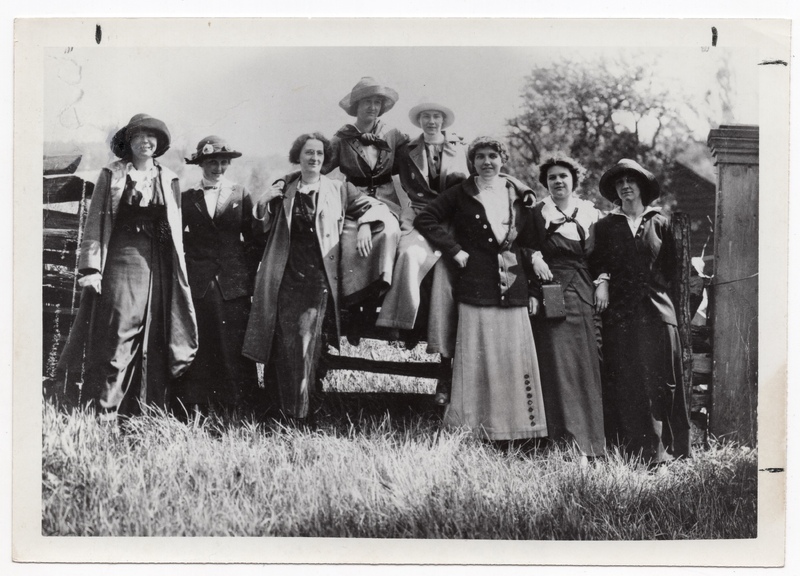
Miss Duble (third from left) and friends, Bennett College, Millbrook, Dutchess, New York. Bennett College Collection.
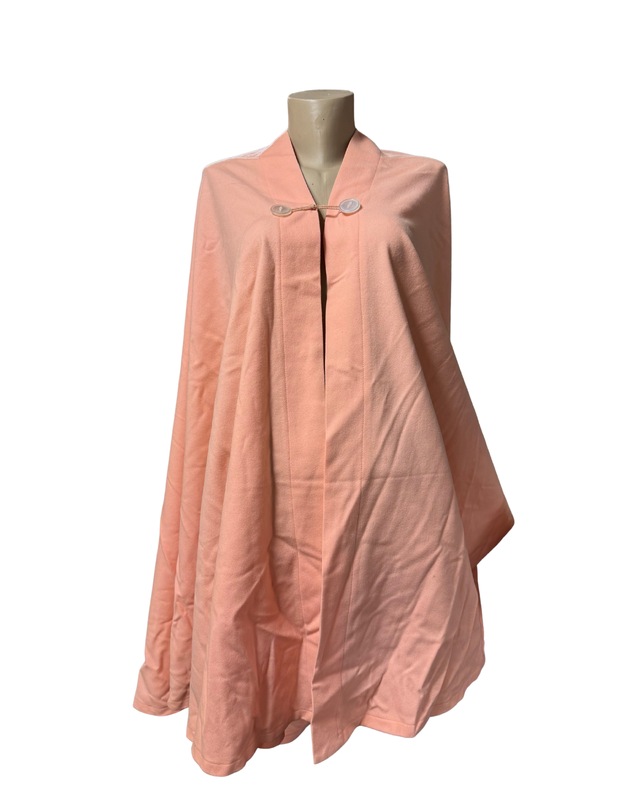
Cape (Chapel), c. 1960. Bennett College Collection.
Weekends and Nights Out
As restrictions lifted in the 1930s and 40s, students found time for fun off-campus, traveling to New York City or neighboring schools including Yale and West Point for College Games and Weekends.
Local establishments in Millbrook like the Red Pheasant (“the Pheas”) and The Blacksmith Shop were popular eateries and students would travel farther afield to Poughkeepsie for date nights at The Viking, The Dells, or the Covered Wagon.

"This Week at Bennett," Bennett College, Millbrook, Dutchess, New York, 1974. Bennett College Collection.
Annual school calendars, class schedules weekly bulletins, and scrapbook photographs give a glimpse into how Bennett students spent their time:
A Typical Day at Bennett, 1920
View records and images of student social life here.

"Sally and M. E. M. Catching Salamanders," Bennett College, Millbrook, Dutchess, New York. c. 1913. Bennett College Collection.
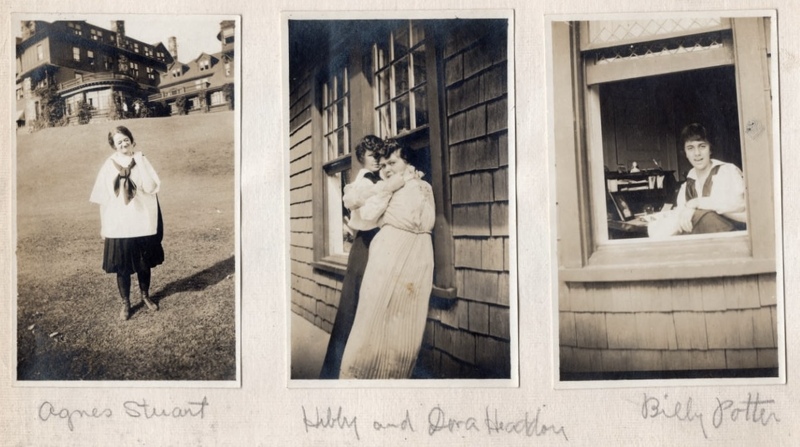
Photograph Album page, Bennett College, Millbrook, Dutchess, New York, c. 1928. Bennett College Collection.
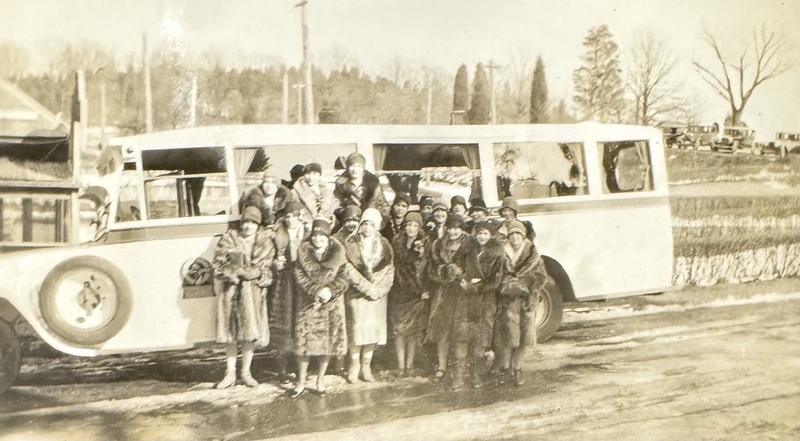
School bus, c. 1920. Bennett College Collection.
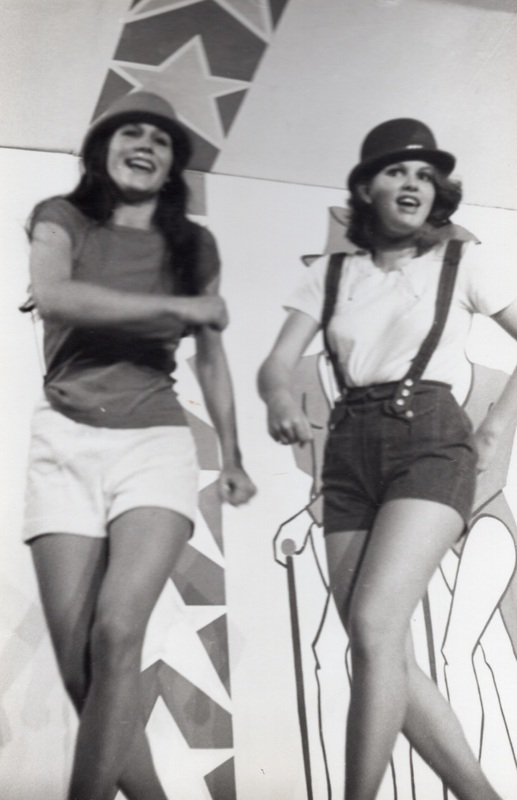
Students, Bennett College, Millbrook, Dutchess, New York, c. 1970. Bennett College Collection.
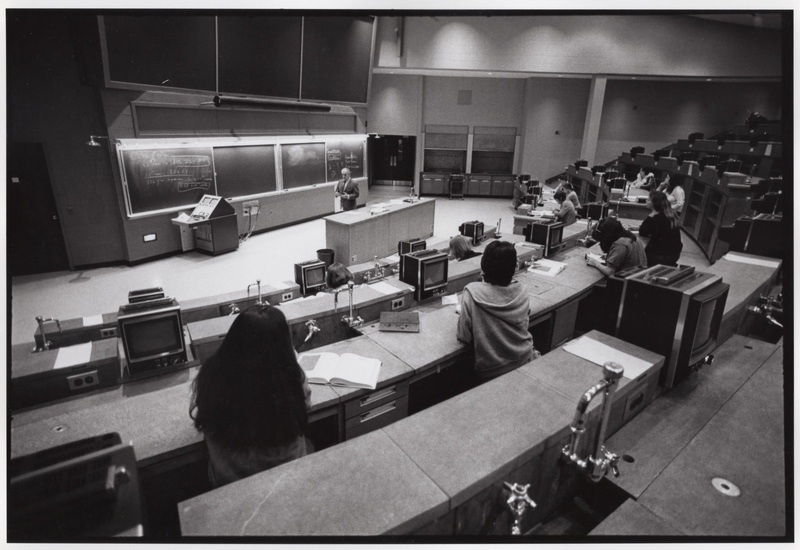
Students in lecture hall, Bennett College, Millbrook, Dutchess, New York, c. 1970. Bennett College Collection.
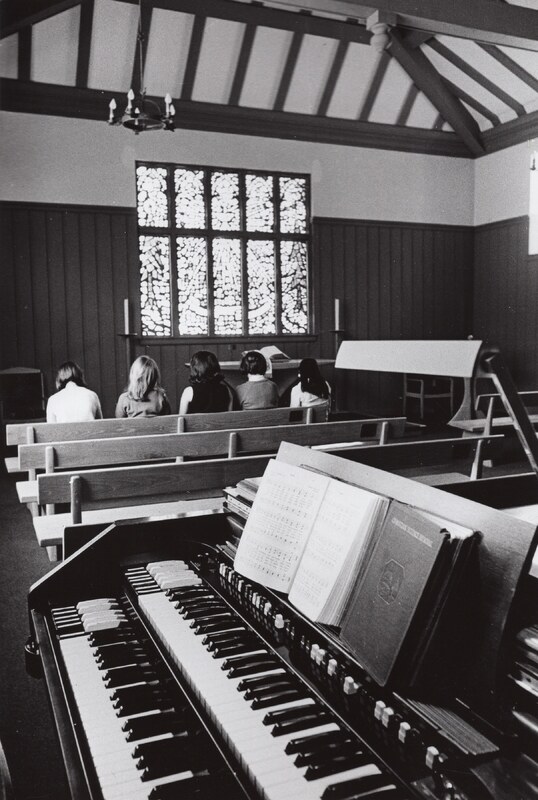
Students in Chapel, Bennett College, Millbrook, Dutchess, New York. c. 1970. Bennett College Collection.
References:
“Dedication: For College a New Step”, Millbrook Round Table, May 12, 1966.
“Inflation Calculator.” U.S. Official Inflation Data, Alioth Finance, 3 Jun. 2026, https://www.officialdata.org/.
“Psychic Drug Testers Living in Retreat”, New York Times, December 15, 1963.
“The Bennett School”, Millbrook Mirror and Round Table, October 4, 1907.