
Browse Exhibits (40 total)
Hurley Mountain Stories
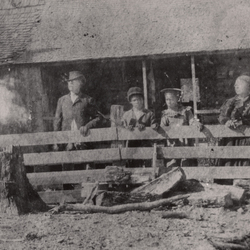
The Hurley Mountain Stories exhibit focuses on a poor, rural, multi-racial community, where free Blacks owned land as early as 1795 in slave-ridden New York State. The project follows this community as it evolves through national crises, from the Civil War through the Depression and to World War I. The website provides researchers, students, and other visitors a variety of options, including “Stories”, “Collections”, and “Items” to explore this fascinating American History.
Patriots of Hudson in the Revolutionary War
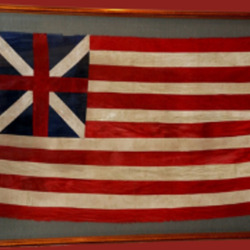
This exhibit is a narrative of the lives of many of the leaders of early Hudson who contributed to the Revolutionary War effort, and how they built Hudson.
Hudson: A History of Whaling & Maritime Commerce

Hudson: A History of Whaling & Maritime Commerce traces Hudson’s founding and early history, focusing on the era of whaling and maritime commerce that created Hudson and built its wealth as well as its reputation as a whaling town.
Bennett College, 1890-1978: Women's Education in Millbrook, New York

Founded in 1890, Bennett College evolved from a small progressive school into one of New York State’s notable institutions for women’s education, reflecting changing roles for women across nearly a century of American history.
Bennett College began under the direction of two sisters Linda Dows Cooksey and Margaret Worcester Dows Dunham and the teacher May Friend Bennett. The school operated on its campus in Millbrook, New York, from 1907 until its closing in 1978. The vision and leadership of its founders and faculty guided the school through several moves, from its meager beginnings in a parlor room in Westchester County to historic Halcyon Hall, as well as the expansion of the Millbrook campus to accommodate a growing student body, evolving curriculum, and extracurricular offerings. During its nearly ninety-year history, the College experienced major national events including the women’s suffrage movement, the Great Depression, two World Wars, and the cultural revolution of the 1960s and 1970s.
Provincial Exile
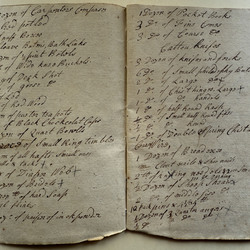
While no Revolutionary War battles took place in New Paltz, New York, the conflict drastically impacted the lives of two men, brothers Roelof Josiah Eltinge and Solomon Eltinge, as well as their family. Roelof Josiah and Solomon were accused of being Loyalists to the British side after refusing to accept paper currency produced by the Continental Congress in their family store. As a result, both brothers were imprisoned and eventually exiled to live behind enemy lines in British-controlled New York for the duration of the war, leaving behind their elderly parents, siblings, and Roelof Josiah’s wife Maria and their eleven children.
Drawn primarily from original eighteenth-century documents in the Historic Huguenot Street (HHS) Archives and the Haviland-Heidgerd Historical Collection, Elting Memorial Library, this exhibit updates and expands upon text written for an earlier HHS exhibit. It adds to the story of Solomon Eltinge and highlights the experiences of Roelof Josiah’s wife Maria Louw and their family.
New Paltz Historic Documents Project

The New Paltz Historic Documents Project, funded by the National Endowment for the Humanities, is a collaboration between four institutions with collections of historical documents: Historic Huguenot Street, the Haviland-Heidgerd Historical Collection at Elting Memorial Library, the Reformed Church of New Paltz, and the Town of New Paltz. The project consists of conserving (as needed), digitizing, and making available online early documents from New Paltz and surrounding communities, ranging in date from the mid-1600s to 1830 with some mid and later 19th-century documents included.
New Paltz in the Civil War

This exhibit includes the entire 1863 New Paltz Enrollment Book and its transcription, a consideration of conscription laws, an examination of particular New Paltz regiments, a partial list of Civil War veterans buried at the New Paltz Rural Cemetery, and a look through the eyes of individuals who experienced the war.
John Hasbrouck
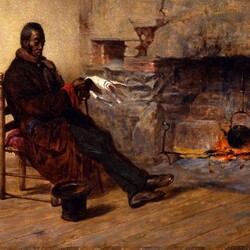
There are no known photographs of John Hasbrouck, born to enslaved parents Peg and Philip. We know John through 19th-century documents such as government records, account books (including two extraordinary books he kept himself), newspaper clippings, and a few personal notes, letters, and receipts. From these fragments, we can form an impression of an intelligent, industrious, and imaginative man, who overcame the challenges of growing up under gradual abolition to marry and raise a family, purchase land, and become one of the first African Americans eligible to vote in New Paltz, New York.
This online exhibit reflects new discoveries about John’s family connections and his early adult years, as well as previously unexplored connections to both the Black and White communities of New Paltz. It updates and greatly expands the exhibit text for John Hasbrouck, “A Most Estimable Citizen,” installed at the DuBois Fort Visitor Center, Historic Huguenot Street, in 2017 and 2018.
Jane Deyo Wynkoop

Born to an enslaved woman in New Paltz, New York, Jane has a remarkable story. Through original archival documents, this exhibit explores her story from birth in 1803 to death in 1876, at age 73.
Women of the Hudson Valley

This exhibit highlights resources available in several digital collections in New York Heritage.
The following organizations contributed to this exhibit: Haviland-Heidgerd Historical Collection at Elting Memorial Library, Historic Huguenot Street, Historical Society of the Town of Warwick, Nyack Library, Vassar College, Locust Grove/Locust Lawn Farm, Woodstock Artists Association and Museum and Women's Studio Workshop.