
Browse Exhibits (40 total)
Lost Hamlets of the Rondout Reservoir

Between 1936 and 1952, a massive engineering project took place in order to provide New York City and surrounding localities with additional drinking water. The purpose of this exhibit is to raise public awareness concerning the impact that the Rondout Reservoir had on the displaced communities of the Lackawack Valley. It is hoped that it will provide an appreciation for the pure water we may otherwise take for granted. The exhibit draws from extensive primary source documentation contained in the collections of Ellenville Public Library & Museum.
Mary Deyo

In 1888, Mary Deyo of Gardiner, NY joined a mission in Yokohama, Japan and taught in an all-girls school. This exhibit uses her collection of papers to explore and compare parts of life in the United States to life in Japan.
Mary Powell: Queen of the Hudson

Built in 1861, decommissioned in 1917, and scrapped between 1920 and 1926, the Mary Powell remained a Hudson Valley constant during a period of incredible social and technological change in the United States. She saw the duration of the Civil War, the industrial revolution, the Gilded Age and Progressive Era, and the start of the First World War. Called "Queen of the Hudson" before construction was even completed, the Mary Powell became an iconic symbol of "America's Rhine." Operated for most of her career by one enterprising family - the Andersons - Mary Powell also represented the best of Hudson River travel - the speed, elegance, safety, and attention to detail that made travel by water preferable for many throughout the 19th and early 20th centuries.
New Paltz Historic Documents Project

The New Paltz Historic Documents Project, funded by the National Endowment for the Humanities, is a collaboration between four institutions with collections of historical documents: Historic Huguenot Street, the Haviland-Heidgerd Historical Collection at Elting Memorial Library, the Reformed Church of New Paltz, and the Town of New Paltz. The project consists of conserving (as needed), digitizing, and making available online early documents from New Paltz and surrounding communities, ranging in date from the mid-1600s to 1830 with some mid and later 19th-century documents included.
New Paltz in the Civil War

This exhibit includes the entire 1863 New Paltz Enrollment Book and its transcription, a consideration of conscription laws, an examination of particular New Paltz regiments, a partial list of Civil War veterans buried at the New Paltz Rural Cemetery, and a look through the eyes of individuals who experienced the war.
Patriots of Hudson in the Revolutionary War
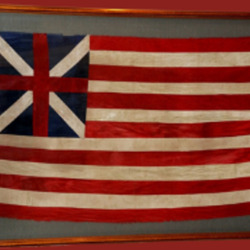
This exhibit is a narrative of the lives of many of the leaders of early Hudson who contributed to the Revolutionary War effort, and how they built Hudson.
Poverty in Early New Paltz

This exhibit is a study of the history of poverty and social welfare in the town of New Paltz, New York. The 1805 Overseer of the Poor Ledger is included with additional documents dating from 1767-1827.
Provincial Exile
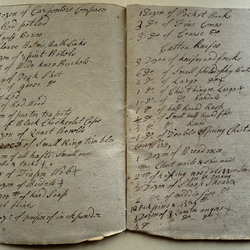
While no Revolutionary War battles took place in New Paltz, New York, the conflict drastically impacted the lives of two men, brothers Roelof Josiah Eltinge and Solomon Eltinge, as well as their family. Roelof Josiah and Solomon were accused of being Loyalists to the British side after refusing to accept paper currency produced by the Continental Congress in their family store. As a result, both brothers were imprisoned and eventually exiled to live behind enemy lines in British-controlled New York for the duration of the war, leaving behind their elderly parents, siblings, and Roelof Josiah’s wife Maria and their eleven children.
Drawn primarily from original eighteenth-century documents in the Historic Huguenot Street (HHS) Archives and the Haviland-Heidgerd Historical Collection, Elting Memorial Library, this exhibit updates and expands upon text written for an earlier HHS exhibit. It adds to the story of Solomon Eltinge and highlights the experiences of Roelof Josiah’s wife Maria Louw and their family.
Quilts of Historic Huguenot Street

This exhibit features quilts, created using a variety of quilting techniques, from the collection at Historic Huguenot Street.
Rescuing the River: 50 Years of Environmental Activism on the Hudson

This exhibit traces the role of the Hudson River in the American environmental movement and the influence of individuals and organizations like Scenic Hudson, Riverkeeper, Clearwater, and the New York State Department of Environmental Conservation in cleaning up the Hudson River. Using primary sources like photographs and paintings, newspaper articles, ephemera, and oral histories, this exhibit provides a comprehensive and river-wide look at environmentalism from the 19th century forward, with special emphasis on the 1960s-90s.